English
 Deutsch
 KiBeats
Du willst Deine eigene Radioshow bei KiBeats?
Music |
2026-03-21 13:38:40
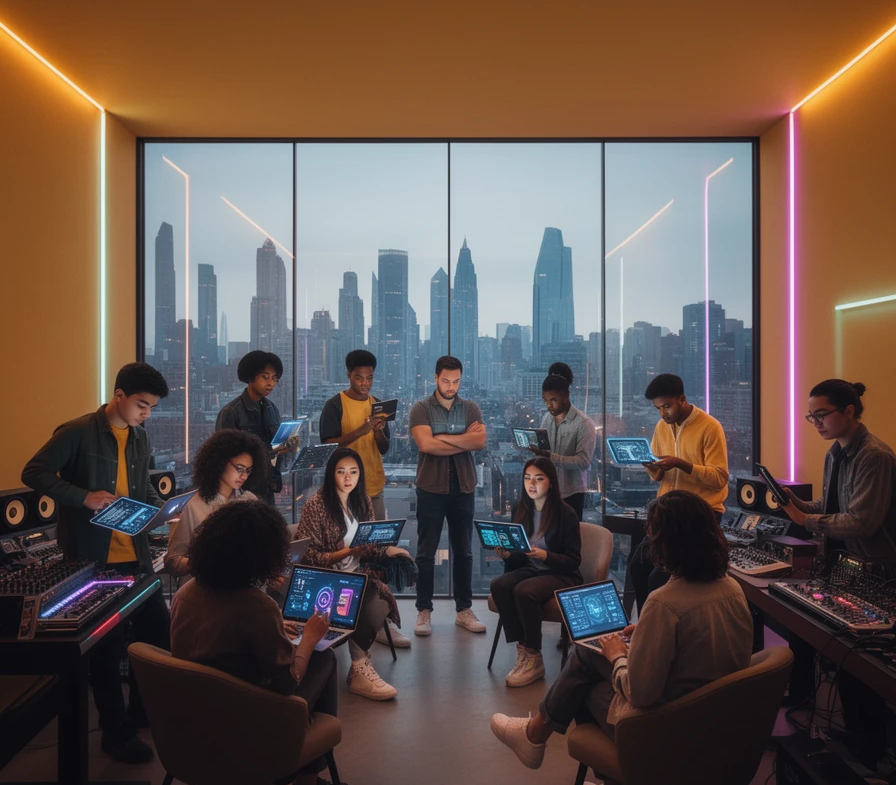
Die Musikindustrie befindet sich mitten in einer ihrer größten Veränderungen seit dem Beginn des Streamings. Während in den vergangenen Jahren fast ausschließlich darüber diskutiert wurde, ob künstliche Intelligenz Musik ersetzen könnte, zeigt sich inzwischen ein deutlich differenzierteres Bild. AI entwickelt sich zunehmend von einer spektakulären Neuheit zu einer selbstverständlichen Infrastruktur – ähnlich wie Social Media, Streaming oder mobile Produktionstools zuvor.
Ein aktueller Beitrag von Music Ally beschreibt sehr treffend, wie sich dadurch auch die Rolle moderner Labels verändert. Die spannendsten neuen Akteure der Branche verstehen sich immer weniger als klassische Labels im traditionellen Sinn. Statt ausschließlich Rechte zu kontrollieren oder Künstler langfristig zu binden, entstehen flexible Netzwerke, kollaborative Creator-Ökosysteme und communitygetriebene Plattformen.
Genau hier beginnt eine neue Phase der Musikindustrie.
Die zentrale Frage lautet heute nicht mehr, ob AI Musik produzieren kann. Das kann sie längst. Entscheidend wird vielmehr, welche Menschen, Communities und kulturellen Bewegungen hinter dieser Musik stehen. Denn je einfacher Inhalte generiert werden können, desto wichtiger werden Identität, Storytelling, Vertrauen und kulturelle Relevanz.
In einer Welt, in der theoretisch jeder täglich hunderte Songs erstellen kann, entsteht Aufmerksamkeit nicht mehr allein durch Technologie. Aufmerksamkeit entsteht durch Kontext, Persönlichkeit und Community. Die wertvollsten Projekte der kommenden Jahre werden deshalb vermutlich nicht diejenigen sein, die einfach nur möglichst effizient AI-Musik generieren. Erfolgreich werden eher Plattformen und Netzwerke sein, die Menschen verbinden, kreative Szenen sichtbar machen und echte kulturelle Dynamiken fördern.
Dadurch verändert sich auch die Rolle von Labels grundlegend. Früher standen Besitz und Kontrolle im Mittelpunkt: Rechte, Distribution, Marketingbudgets und Exklusivverträge. Die neue Generation denkt stärker in Beteiligung, Kollaboration und Reichweite. Künstler arbeiten heute global, Communities entstehen plattformübergreifend und kreative Prozesse werden zunehmend offen, remixbar und interaktiv.
Die Grenzen zwischen Artist, Producer, Fan und Creator verschwimmen dabei immer stärker. Musik entwickelt sich von einem fertigen Produkt zu einem dynamischen Prozess, an dem Communities aktiv teilnehmen können. Songs entstehen gemeinsam, werden weiterentwickelt, remixt, adaptiert und in unterschiedlichen kulturellen Kontexten neu interpretiert. Technologie beschleunigt diesen Wandel – aber sie ersetzt nicht den menschlichen Faktor.
Gerade deshalb entstehen aktuell große Chancen für neue Plattformen und Netzwerke. Viele Unternehmen konzentrieren sich momentan darauf, bessere AI-Generatoren zu bauen. Doch langfristig könnte der größere Wert gar nicht in den Generierungstools selbst liegen, sondern in den Ökosystemen, die darum entstehen. Wer kreative Communities organisiert, internationale Kollaborationen ermöglicht und Vertrauen innerhalb neuer Creator-Strukturen aufbaut, könnte eine deutlich nachhaltigere Position entwickeln.
Für onplug ist diese Entwicklung besonders spannend, weil sie zeigt, dass die Zukunft nicht nur aus einzelnen Tools oder Apps besteht. Die eigentliche Chance liegt im Aufbau neuer kultureller Netzwerke. In einer Umgebung, in der Kreativität global, kollaborativ und AI-unterstützt wird, gewinnen Plattformen an Bedeutung, die Discovery, Community und kreative Zusammenarbeit miteinander verbinden.
Die Musikindustrie bewegt sich damit auf ein Modell zu, das offener, internationaler und communitygetriebener ist als jemals zuvor. AI wird dabei ein wichtiger Bestandteil sein – aber nicht als Ersatz für Kreativität. Vielmehr wird sie zur Infrastruktur einer neuen kreativen Kultur, die Menschen miteinander verbindet und neue Formen künstlerischer Zusammenarbeit ermöglicht.
Die nächste Generation von Labels wird deshalb wahrscheinlich nicht nur Musik veröffentlichen. Sie wird Communities aufbauen, kulturelle Bewegungen begleiten und kreative Netzwerke orchestrieren. Genau dort beginnt gerade die Zukunft der Musikindustrie.
The music industry is currently going through one of its biggest transformations since the rise of streaming. Over the last few years, much of the conversation focused on whether artificial intelligence could eventually replace human music creation. But by 2026, the discussion has evolved into something far more nuanced. AI is increasingly becoming infrastructure rather than spectacle — similar to what happened with social media, streaming platforms, and mobile production tools in earlier eras.
A recent article from Music Ally highlights how this shift is also reshaping the role of modern music labels. The most forward-thinking companies no longer operate like traditional labels built purely around ownership and control. Instead, a new generation of flexible creator networks, collaborative ecosystems, and community-driven platforms is beginning to emerge.
This marks the beginning of a new phase for the music industry.
The core question is no longer whether AI can create music. It already can. What matters now is the people, communities, and cultural movements behind the music. As content generation becomes easier and more accessible, identity, storytelling, trust, and cultural relevance become significantly more valuable.
In a world where anyone can theoretically generate hundreds of songs every day, technology alone is no longer enough to capture attention. Attention increasingly comes from context, personality, and community. The most important projects of the coming years will likely not be those simply producing the most AI-generated content. Instead, success will come to the platforms and networks that connect people, amplify creative scenes, and enable authentic cultural participation.
As a result, the role of labels is fundamentally changing. Traditional music labels were centered around ownership: controlling rights, financing releases, managing distribution, and locking artists into long-term contracts. The next generation operates differently. It focuses more on participation, collaboration, reach, and community-building.
Artists now work globally, communities form across platforms, and creative processes are becoming increasingly open, remixable, and interactive. The boundaries between artist, producer, fan, creator, and platform continue to blur. Music itself is evolving from a finished product into an ongoing collaborative process that communities can actively shape and participate in.
Technology accelerates this transformation, but it does not replace the human element. In fact, the more AI-generated content exists, the more audiences seem to value authenticity, human identity, and cultural connection.
This creates significant opportunities for new kinds of platforms and creator ecosystems. Many companies are currently focused on building better AI generation tools. But over time, the larger value may not lie in the tools themselves. It may lie in the ecosystems built around them. The companies that successfully organize creative communities, enable international collaboration, and create trusted creator infrastructures could build much more sustainable long-term positions.
For onplug, this development is especially relevant because it reinforces the idea that the future is not simply about standalone apps or AI tools. The bigger opportunity lies in building cultural networks that combine discovery, collaboration, participation, and community.
The music industry is moving toward a model that is more open, global, collaborative, and community-driven than ever before. AI will undoubtedly play an important role in this future — but not as a replacement for creativity. Instead, it will function as infrastructure for an entirely new creative culture that connects people and enables new forms of artistic collaboration.
The next generation of labels will likely do far more than release music. They will build communities, shape cultural movements, and orchestrate creative ecosystems. That is where the future of the music industry is beginning to take shape. (ck)